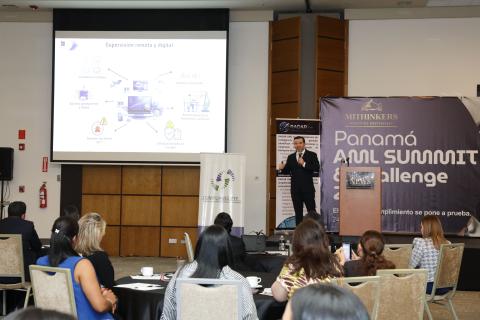

Panama continues to strengthen its banking supervision model through a more agile, continuous, and risk-based approach, supported by the strategic use of technology. This was highlighted by Bilardo De La Victoria, Director of Risk Management of the Superintendency of Banks of Panama, during his participation in the Panama AML Summit & Challenge 2026, where he delivered the presentation titled “Remote and Digital Supervision in Banking.”
In an increasingly dynamic financial environment, he explained that the traditional model based on on-site inspections and periodic reviews is being replaced by remote supervision frameworks that enable continuous, real-time monitoring. This evolution enhances responsiveness and facilitates the early identification of risks.
“The objective is no longer simply to identify risks after they occur, but to anticipate and manage them in a timely manner,” said De La Victoria, noting that continuous access to data and the use of advanced analytics strengthen decision-making and increase supervisory effectiveness.
He also underscored the key role of SupTech technologies, which are transforming supervision through process automation, predictive analytics, and the integration of large volumes of information, enabling more efficient resource allocation and stronger control mechanisms.
Finally, he noted that this approach is consolidating a more preventive, modern, and internationally aligned supervisory model, reinforcing the stability, resilience, and confidence of Panama’s financial system. The transition toward a digital model not only responds to a global trend but also represents a strategic necessity to ensure the security and sustainability of the banking system of the future.
The event also addressed relevant topics such as money laundering, market transparency, supervision of non-financial reporting entities, terrorist financing, and risks associated with the digital and crypto ecosystem.